The rule here is pretty straightforward, and Purdue's Online Writing Lab has a nice explanation. However is a conjunctive adverb, not a coordinating conjunction . Remember that an adverb modifies a verb, and the word conjunction implies that it's bringing two separate ideas together. A conjunctive adverb must use a semicolon to connect two independent clauses, NOT just a comma. Your thoughts on punctuation with then as a conjunctive adverb? In my early copyediting days, it was drilled into me that then required a comma + and or a semicolon between two independent clauses ("Drive 4 miles, and then turn left . . .").

A copy chief I worked with as a freelancer about a decade ago figuratively slapped my hands for following that rule, saying that a comma alone sufficed and the traditional rule was old-fashioned. I've been using just the comma ever since, but I'm suddenly gripped by second thoughts. As a conjunctive adverb, however is used to join two independent clauses to form a compound sentence.
An independent clause is a clause that could stand alone as a complete sentence. The "however" introduces a contrast or opposition between two independent clauses. Learn to distinguish conjunctive adverbs from subordinating conjunctions; they do not function in the same way. Conjunctive adverbs should be used to begin independent clauses, not to join them. Punctuation and grammar rules state that two independent clauses connected with a conjunctive adverb cannot be joined with only a comma.

The semicolon is strong enough to hold them together, and the full stop of the period is powerful enough to break the clauses apart. Enclosed by commas it underlines what precedes it, often with contrast. Without either it points to the contrast without emphasis; this lets you avoid unnecessary punctuation where no ambiguity is likely to arise. In a nutshell, however is an adverb, not a true conjunction, so it can't join two independent clauses with just a comma. You can either join those clauses with a semicolon or separate them with a period.

But either way, however should be set off by commas. When it's in the middle of a clause, the commas go on both sides; when it's at the beginning of a clause, it just needs a following comma. Hopefully this will help Bob stop getting those funny looks. However, therefore is also considered as a conjunctive adverb. Adverbs describe or modify a verb, and this part of speech also does this to adjectives, prepositions and conjunctions. You also have to remember that a semicolon should precede a conjunctive adverb that splits up two independent clauses.

Unlike the coordinating conjunction "but," "however" is not used to link two independent clauses in a single sentence. As such, if you want to use it to contrast two points, you need to make sure they are both complete sentences. All of these examples create comma splices because there are complete sentences to the left and the right of the conjunctive adverbs however, therefore, and moreover. The commas after "growth," "hunger," and "poet" create the comma splices. Here is the correct way to punctuate these sentences.
A common problem writers face is the incorrect usage of conjunctive adverbs. Many times it is because they confuse them with coordinating conjunctions. The adverb "however" means "to whatever extent or degree".

It's typically used in sentences to merge two independent clauses to make a single, compound sentence. The term could be used in the middle of a sentence, with or without punctuation. An independent clause is a unit of grammatical organization that includes both a subject and verb and can stand on its own as a sentence.

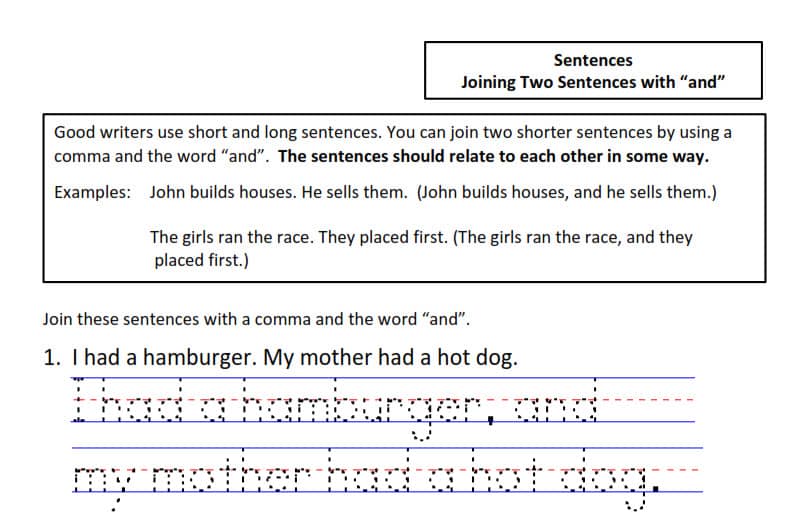
In the previous example, "I went running" and "I saw a duck" are both independent clauses, and "and" is the coordinating conjunction that connects them. You and some other readers raised a good point, and I've revised the post a little to address that. When used at the start of a new clause, these transitional adverbs or adverbial phrases should be preceded by a period or a semicolon, not a comma.

But in mid-sentence, they should be set off by commas, as in Transitional adverbs, for example, can be tricky. As you may recall from above, an independent clause has a subject and a verb and can stand on its own as a sentence. Often, a coordinating conjunction will connect two independent clauses — like the word "but." Possibly, the only similarity between "but" and "and" is the punctuation usage. Both do not have commas after them, and they also usually have just a comma right before when merging two independent clauses instead of a semicolon, unlike "however".

You put a semicolon before other conjunctive adverbs when they connect main clauses too. For example, you'd put a semicolon before the words "consequently," "moreover," "nevertheless," "still," and "therefore" in similar sentences. However also can be used in the middle of a compound sentence. When used in this fashion, it serves as a conjunctive adverb that connects two independent clauses. When correcting a comma splice, that is when joining two independent clauses with a coordinating conjunction, put the comma before and.

A conjunctive adverb (e.g., "however," "furthermore," "consequently") provides a transition (i.e., acts like a bridge) between the first independent clause and the second. For this reason, conjunctive adverbs are also known as "transitional phrases." When two independent clauses come together to make a compound sentence, "however" is used with a semicolon (;) before it and a comma right after. Though some writers rebel against this rule and surround their conjunctive adverbs with commas, most still prefer the significant pause the semicolon or period offers. When you want to join two independent clauses, you need a conjunction or a semicolon. With the way that the adverb therefore works, it is more often found in the centre of a sentence as an interrupter with a comma before and after the word.
However, it does not join two independent clauses together unlike the latter. If the word is restrictive, commas should not be used; if the word is nonrestrictive, commas are required. When these words join two independent clauses they are known as adverbial conjuncts because they are adverbs acting as conjunctions. The word however in English can be a challenge to use correctly. In its primary usage, when used as a conjunctive adverb, the word "however" indicates a sudden change in thought. It signals the reader that the statement coming after the word "however" will be a contradiction or modification of the statement that appears before the word.

When used this way, the word "however" is typically preceded by a semicolon or a period and immediately followed by a comma. Or, you can simply write the two independent clauses as separate sentences. It's also important not to get confused between the difference of conjunctive adverbs and coordinating conjunctions.

It's more of a problem when the conjunctive adverb pops up in the middle of a sentence when a coordinating conjunction should be used. This article defines 'conjunctive adverbs,' which connect clauses and show relationships. Learn where to use commas and where to place these adverbs in sentences to get the effect you want. The grammatical term for a joining word is conjunction.

Conjunctions refer to those words in the English language such as and or but or since or because that allow us to build more complex sentences out of simpler ones. The conjunctions and and but are called coordinating conjunctions; the conjunctions since and because are called subordinating conjunctions. Most of the time, problems occur when the writer uses a conjunctive adverb in the middle of a sentence when a coordinating conjunction is actually needed. But remember that conjunctive adverbs can be used in any part of a sentence. The word and joins these two independent clauses.

Independent clauses are those that can each stand alone as a complete sentence. The second is Then he chased a squirrel through the park. A comma is used after the first independent clause except in cases where the two independent clauses are very short, and there's no chance of confusion, such as He jumps high and runs fast. It's purely an adverb that can do conjunction duties when the need arises or when two independent clauses are a bit too loaded or complex for traditional conjunctions like "but" and "and" to glue or shoulder.
But "however" does exhibit a relationship between two clauses as more rhetorical or semantic than grammatical. But when "however" is not used as a "conjunction" or doesn't link two independent clauses, it has no preceding semicolon. Put a comma after however if you're using it as a conjunctive adverb to introduce a contrast, and it is followed by an independent clause . Mind your commas and semicolons, and don't use any punctuation after "however" when you use it to mean "in whatever manner," "to whatever extent," or "no matter how." Since each of these is used as a coordinating conjunction, you'll still need to punctuate your sentences correctly.

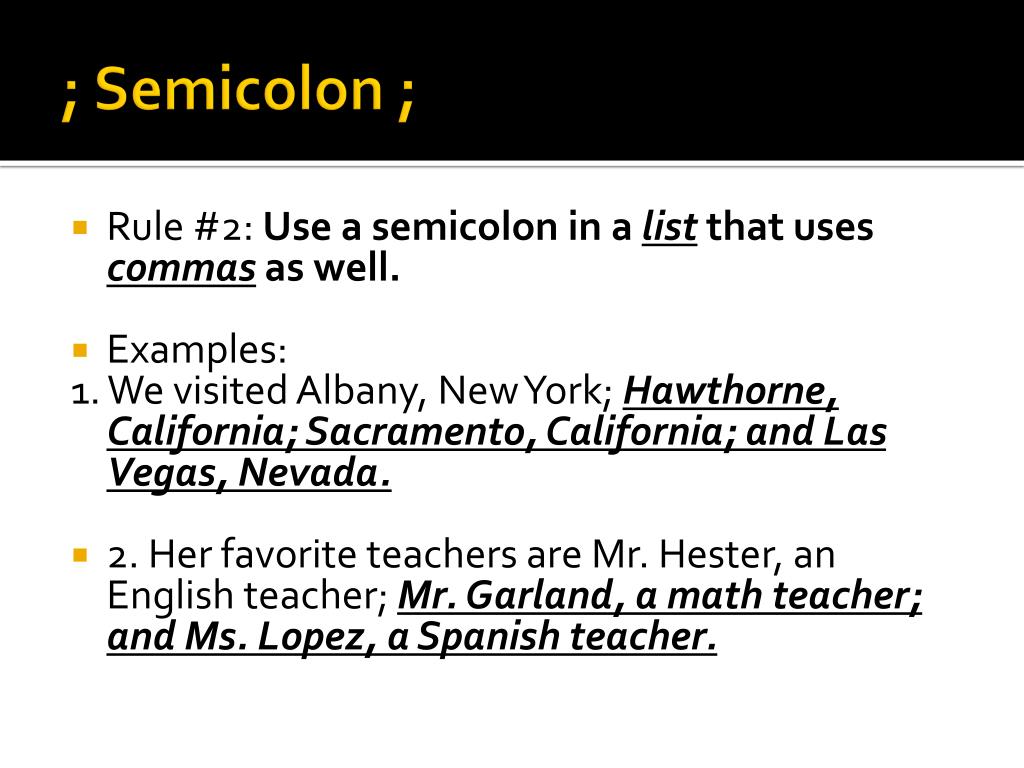
Still, it's a good idea to have a range of conjunctions ready, so you don't always use "however" to introduce contrasting points. A semicolon may be used between independent clauses joined by a connector, such as and, but, or, nor, etc., when one or more commas appear in the first clause. Appropriate punctuation is required to join two independent clauses. A run-on or fused sentence occurs when this punctuation is completely absent.

How To Use However In A Sentence Examples The grammatical term for a group of words that can stand on its own as a complete sentence is independent clause. To be an independent clause, the group of words must contain both a subject and a verb. In the independent clause I completed my essay, I is the subject, and completed is the verb. Use commas to set off a nonrestrictive clause in the middle of a sentence, but not to set off a restrictive clause. Nonrestrictive clauses tell you something about the subject of a sentence, but they do not limit, or restrict, the meaning. Restrictive clauses, on the other hand, limit the possible meaning of the subject.
When we join two clauses in a sentence with however meaning 'nevertheless', 'but' or 'yet', the rules state it should be preceded by a semicolon and followed by a comma. The grammatical reason is that however is an adverbial conjunct , not a conjunction. Other words in this category include moreover, therefore and furthermore. The word however in English typically is used as a conjunctive adverb, indicating a turn of events or a sudden change in thought. When used this way, the word "however" typically is preceded by a semicolon or a period, and it is immediately followed by a comma. There are many discourse markers that express different relationships between ideas.

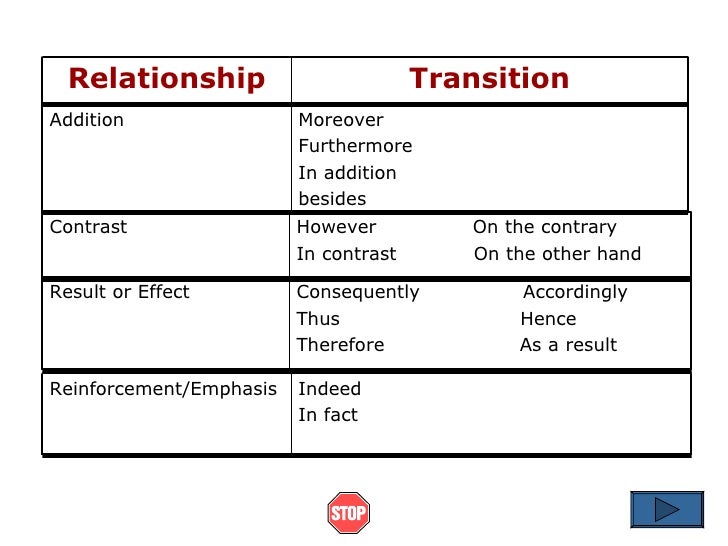
The most common types of relationship between ideas, and the sentence connectors that are most often used to express these relationships, are given in the table below. The discourse markers in the table are generally used at the start of a phrase or clause. Sentence connectors do not always begin a completely new sentence; they may be separated from the previous idea with a semi-colon.

We typically think of adverbs as modifiers, but conjunctive adverbs are a special breed. Thus, a conjunctive adverb is an adverb that connects two clauses. Conjunctive adverbs show cause and effect, sequence, contrast, comparison, or another type of relationship. Place commas inside, not outside, quotation marks.

Follow this practice whether or not the comma is part of the original quotation. In the incorrect example, the reader may at first think the customer ate the pie and the waitress. In the correct example, the comma before the conjunction tells the reader, "Stop, another independent clause with its own subject is about to begin." When joining two independent clauses with a conjunction, place a comma before the conjunction.

Conjunctions include the words "and," "but," "or," "nor," and "yet." Another context would be when a speaker builds up one scenario with multiple sentences. Then a single contrastive sentence follows with initial "however." It would be confusing and actually incorrect to attach the "however" to the final sentence with a semicolon. And it is just plain silly to require that the "however" be moved to a medial position.

English is much more robust than that, and allows many words and phrases to be fronted or otherwise repositioned, usually with a pause to indicate a non-default position. I did a bit of research and found that not everyone agrees on when to call it a conjunction and when to call it an adverb. Some references would call "however" in your example a conjunction, some an adverb, and some a conjunctive adverb. My post was mostly based on the examples in Merriam-Webster and their entries for "however" as a conjunction and an adverb, but note that Lexico dictionary doesn't even have an entry for "however" as a conjunction!

While a period ends a sentence, a comma indicates a smaller break. Some writers think of a comma as a soft pause—a punctuation mark that separates words, clauses, or ideas within a sentence. Beware of putting a comma before "but" every single time. It should only be used when connecting two independent clauses .
Many adverbs end in "ly" and answer the question "how?" How did someone do something? Adverbs that don't end in "ly," such as "when" or "while," usually introduce a dependent clause, which rule number two in this post already covered. Commas are needed before coordinating conjunctions, after dependent clauses , and to set off appositives. Conjunctive adverbs are always used with a semi-colon in front of them and a comma after them. We use 'although' and 'despite / in spite of' to connect two clauses in the same sentence. On the other hand, 'however' isn't used to connect two clauses.

Instead, we usually put the two ideas in two separate sentences. We put 'however' in the second sentence, and we can put it at the beginning, at the end, or after the subject.I love London. It's possible that sentence-initial however could be ambiguous without the following comma, but even then the confusion is likely to be momentary.

It's easy to write fragment sentences when you start them with, "However." If a sentence begins, "However, …" it needs to be followed by an independent clause! Check all your sentences that contain it to make sure they are complete. Finally, the correct sentence comes with a semi-colon before "however" and a comma after. The semi-colon breaks up the two connected clauses to help with understanding.

